CM Punjab Introduce Apna Khet Apna Rozgar Scheme 2026
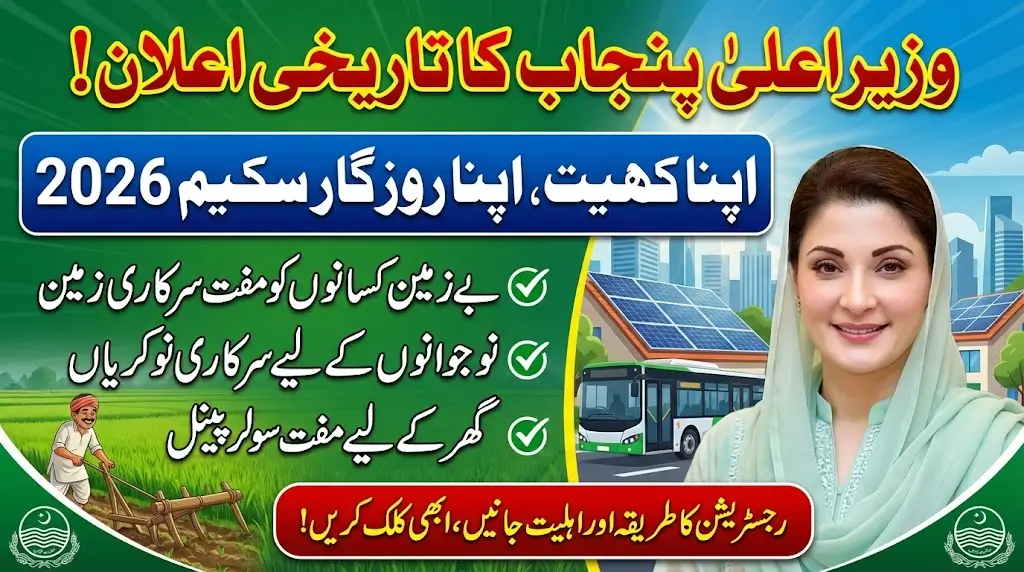
CM Punjab Introduce Apna Khet Apna Rozgar Scheme 2026: Punjab has entered 2026 with a renewed focus on rural empowerment and employment-driven development. Under the leadership of Chief Minister Maryam Nawaz Sharif, the provincial government has introduced the Apna Khet Apna Rozgar Scheme 2026, a landmark initiative designed to reshape the agricultural economy and uplift landless communities. This program represents a shift away from traditional tenant-based farming toward self-cultivation under structured government support.

The scheme is not limited to agricultural reform alone. It reflects a broader governance strategy that connects land access, youth employment, public transport, and housing relief into a single development vision. By prioritizing immediate implementation, the Punjab Government has signaled that this initiative is not symbolic but intended to deliver measurable results at the grassroots level.
You Can Also Read: CM Solar Panel Scheme 2026 BOP Team Members Head Office
Apna Khet Apna Rozgar Scheme
| Detail | Information |
|---|---|
| Scheme Name | Apna Khet Apna Rozgar |
| Launched By | Punjab Government |
| Chairperson | CM Maryam Nawaz Sharif |
| Beneficiaries | 50,000 landless farmers |
| Land Type | Government agricultural land |
| Coverage | Entire Punjab |
| Objectives | Self-cultivation, income stability, reduce dependency on landlords |
| Other Initiatives | Youth jobs, green transport, housing relief, livestock shows |
What Makes Apna Khet Apna Rozgar a Game-Changer
For decades, landless farmers in Punjab have depended on landlords or short-term labor arrangements, often with unstable income and limited control over production. The Apna Khet Apna Rozgar Scheme changes this reality by allowing selected individuals to cultivate government-owned agricultural land under their own operational authority. While ownership remains with the state, economic control is transferred to the farmer.
This shift directly impacts rural dignity and long-term sustainability. Cultivation under one’s own name encourages better crop planning, investment in soil health, and a stronger sense of responsibility. The program is structured to support consistent agricultural cycles, ensuring beneficiaries are not disrupted by seasonal delays or administrative bottlenecks.
You Can Also Read: CM Punjab Solar Scheme 2026 Registration Reopened for Free Solar Panels
Target Beneficiaries and Provincial Coverage
The scheme aims to benefit 50,000 landless farmers across Punjab, making it one of the largest agricultural inclusion programs in the province’s history. Unlike earlier initiatives that were limited to specific districts, this program has been approved for province-wide implementation. This ensures equal opportunity for rural households regardless of geographic location.
By focusing on tenants, sharecroppers, and daily wage agricultural workers, the government is targeting the most economically vulnerable segment of the rural population. The selection process is expected to prioritize individuals with farming experience, ensuring that allocated land is actively cultivated rather than left idle.
Key Objectives of the Apna Khet Apna Rozgar Scheme
- Provide cultivable government land to landless agricultural workers
- Reduce dependency on landlord-based farming systems
- Promote self-employment through agriculture
- Ensure timely cultivation to avoid crop season losses
- Strengthen rural income stability across Punjab
Economic Impact on Rural Families
Access to land is directly linked to economic independence in agrarian societies. Through this scheme, rural families gain the ability to generate income through crop sales, livestock integration, and value-added farming practices. This income stability can lead to improved nutrition, better education access for children, and reduced rural-to-urban migration.
Over time, the scheme is expected to contribute to local food security by increasing cultivated acreage and improving crop output. When farmers have secure access to land, they are more likely to invest in quality seeds, modern techniques, and sustainable practices that benefit the broader agricultural ecosystem.
You Can Also Read: Punjab 3 Marla Scheme Ballot Result Announced For Homeless People
Why Immediate Implementation Matters
One of the most notable aspects of this initiative is the government’s insistence on rapid execution. Delays in land allocation often result in missed sowing periods, which can render even well-designed schemes ineffective. By ordering immediate identification and allotment, the Punjab Cabinet aims to align the program with active crop seasons.
This urgency also builds public trust. When policies move quickly from approval to execution, beneficiaries are more likely to engage actively and comply with program guidelines. It sets a precedent for future development initiatives that prioritize delivery over prolonged planning phases.
Supporting Youth Employment Alongside Agriculture
Apna Khet Apna Rozgar Scheme was approved during a cabinet session that also focused heavily on youth employment. Recognizing that agriculture alone cannot absorb the growing labor force, the Punjab Government has approved thousands of new positions across multiple departments. This dual approach strengthens both rural and urban employment pathways.
By addressing unemployment through public sector recruitment and self-employment initiatives simultaneously, the government is creating diversified income opportunities. This strategy reduces pressure on any single sector while encouraging balanced economic growth.
You Can Also Read: Punjab Ration Card Scheme Relaunched in 2026 Get Rs. 10000
Departments Approved for New Government Jobs
- Crime Control and Safety Units
- Excise and Revenue Management
- Provincial Home Affairs
- Tourism and Visitor Security Services
- Digital Innovation and Technology Wings
- Contract-based development authorities
Expansion of Green Transport to Tehsil Level
Transport accessibility plays a critical role in economic participation, especially in smaller towns and rural areas. The expansion of electric bus services from major cities to tehsil-level routes marks a significant improvement in public mobility. This move supports workers, students, and small traders who rely on affordable transport for daily activities.
The introduction of cashless fare systems further modernizes the transport network. By encouraging digital payments while still allowing cash options, the government is easing the transition toward a more transparent and efficient public transport model.
You Can Also Read: CM Punjab Loan Scheme 2026 Apply For Interest Free 30 Lakh Loan Via Parwaaz Card
Transport Reforms Introduced in 2026
- Electric buses extended beyond urban centers
- Digital fare payments via approved platforms
- Reduced environmental impact through clean energy
- Improved connectivity for small towns and villages
Housing Relief Through Apni Chhat Apna Ghar
Housing security remains a pressing issue for many families in Punjab. The expansion of the Apni Chhat Apna Ghar initiative complements agricultural reforms by addressing shelter needs. Allowing joint families to apply for interest-free home extension loans reflects an understanding of local living arrangements.
This policy helps families expand existing homes instead of relocating, preserving social structures while improving living conditions. Initial implementation in selected districts will likely serve as a foundation for wider rollout across the province.
Cultural and Livestock Development Initiatives
Agriculture in Punjab is deeply connected to livestock and cultural traditions. By reviving district-level livestock exhibitions and cattle shows, the government is promoting knowledge exchange and modern breeding practices. These events are designed to go beyond entertainment, serving as educational platforms for farmers.
Such initiatives strengthen the agricultural value chain by improving animal health, productivity, and market awareness. They also reinforce Punjab’s cultural identity, which is closely tied to rural life and farming heritage.
You Can Also Read: CM Punjab Free Solar Scheme 2026 Verification Started for Submitted Applications
Additional Cabinet Decisions Supporting Rural Growth
- Introduction of early-age driving permits for youth
- Development of new tourism destinations beyond traditional hubs
- Increased stipends for school management councils
- Recruitment flexibility in heritage and archaeology departments
- Approval of new leadership roles in agriculture administration
Long-Term Vision Behind the Scheme
Apna Khet Apna Rozgar Scheme is not a short-term relief measure. It represents a structural reform aimed at redefining land access and rural employment in Punjab. By combining land cultivation rights, job creation, transport access, and housing support, the government is building an integrated development framework.
If implemented transparently and monitored effectively, this initiative could serve as a model for other provinces. It aligns economic empowerment with social dignity, ensuring that growth is both inclusive and sustainable.
You Can Also Read: CM Laptop Scheme 2026 Applying Date Extend For 1st or 2nd Semester
Final Thoughts
CM Punjab Introduce Apna Khet Apna Rozgar Scheme 2026 For Punjab Youth marks a decisive step toward practical governance. By focusing on ownership of effort rather than ownership of assets, the program restores confidence among farmers and rural workers. Its success will depend on fair selection, timely execution, and continued policy support, but its foundation signals a promising future for Punjab’s rural economy.